A fire is one of the most distressing events a homeowner can experience. Beyond the visible destruction, it leaves behind a profound emotional impact—shaken routines, uncertainty about safety, and a home that no longer feels like the secure haven it once was. In the aftermath, the questions come quickly: Where do we start? Who can help? How long will it take before our home feels livable again? These questions are natural, and the good news is that the path forward becomes far more manageable once you understand the stages of fire damage restoration and what to expect from each step.
Restoring a home after a fire is not simply about repairs; it's about rebuilding comfort, reclaiming stability, and restoring a sense of normalcy. Homes in Reseda and nearby communities often face unique challenges due to a combination of heat, smoke movement patterns, and structural variations. Some fires cause obvious destruction, while others create hidden issues like embedded odors, soot, or weakened materials. This is why a clear understanding of the restoration timeline empowers homeowners—it replaces fear with knowledge and transforms chaos into a structured plan. With the support of experienced professionals like Yostin Water Damage & Restoration Inc, homeowners can move through this process with confidence rather than uncertainty.
The Emotional Weight Behind Fire Damage—and Why Understanding the Process Helps
Fire affects more than walls and belongings; it affects a sense of safety. Even once the flames are out, the smell of smoke, the sight of soot-covered rooms, or the awareness of what was lost can trigger stress and overwhelm. Many homeowners describe the aftermath not as a single event, but as a lingering emotional disruption. This is exactly why understanding the restoration process becomes essential. When you know what's coming next, you gain a sense of direction. When the steps are clear, the fear of the unknown begins to fade.
A structured restoration timeline gives homeowners something priceless: stability. You understand how long each phase takes, why certain steps matter, and how professionals ensure your home becomes safe, healthy, and fully restored. In the hands of a skilled restoration team, the journey becomes less about loss and more about rebuilding what matters most.
What Fire Damage Really Involves
Fire damage is complex because it rarely comes alone. Even small fires can spread smoke and soot far beyond the ignition point. Heat can weaken structures, and firefighting water can saturate materials or create secondary damage. Many homeowners feel shocked by the extent of the damage because the most severe issues are often invisible at first glance.
Understanding the different layers of fire damage prepares you for the restoration journey ahead:
Direct Structural Damage
Flames can burn through framing, flooring, insulation, roofing, and personal belongings. This type of damage is immediate and often severe, requiring careful evaluation.
Smoke and Soot Residue
Smoke travels quickly, reaching areas untouched by flames. Soot embeds into walls, ceilings, HVAC systems, upholstery, and porous materials. If not treated correctly, soot can corrode metal, stain surfaces, and cause respiratory discomfort.
Water and Chemical Damage from Firefighting
Water used to extinguish the fire can cause secondary issues such as mold, warping, and structural saturation. Fire suppression chemicals also leave behind residues that must be professionally cleaned.
Odor and Air Quality Compromise
Smoke odors penetrate deep into materials. Without specialized deodorization techniques, these odors linger indefinitely and affect indoor comfort.
With so many overlapping types of damage, the restoration timeline becomes essential for creating order from chaos. A clear sequence ensures every issue is addressed thoroughly, safely, and in the correct order.
Step 1: Emergency Response and Initial Assessment
The restoration timeline begins the moment professionals arrive. Fire damage requires urgent attention because materials continue to deteriorate even after the flames are out. Soot becomes more corrosive over time, moisture spreads, and smoke odors embed deeper into the home.
During the initial assessment, restoration experts evaluate structural safety, identify hazards, and determine the scope of both visible and hidden damage. This step immediately brings homeowners a sense of relief—the uncertainty begins to lift, and a clear path forward takes shape.
Yostin Water Damage & Restoration Inc specializes in rapid response, ensuring the property is secured, stabilized, and ready for the next phase of restoration.
Step 2: Securing the Property and Preventing Further Damage
Once the assessment is complete, the next priority is protecting the home from additional damage. Fires often leave openings in roofs, walls, or windows that expose the property to weather, vandalism, or animals. Securing the structure helps homeowners feel safe again, knowing their home is no longer vulnerable.
This stage may include:
- Boarding up windows or openings
- Tarping damaged roofs
- Reinforcing weakened framing
- Shutting off compromised utilities
- Addressing electrical hazards
These measures buy time, stabilize the home, and prevent the situation from worsening while the restoration team prepares for deeper cleanup and structural repairs.
Step 3: Water Extraction and Drying (If Firefighting Caused Saturation)
Many homeowners are surprised to discover that water damage is often just as significant as fire damage. Fire hoses release large volumes of water in a short time, saturating walls, flooring, insulation, and personal belongings. If this moisture is not removed quickly, it can lead to mold growth, structural instability, and lingering odors.
The drying stage resembles a water damage restoration project, requiring:
- Industrial water extraction
- Air movers and dehumidifiers
- Moisture mapping
- Drying of structural components
This phase is critical because it lays the groundwork for effective cleaning, smoke removal, and future repairs. Without thorough drying, the restoration timeline becomes longer and complications increase.
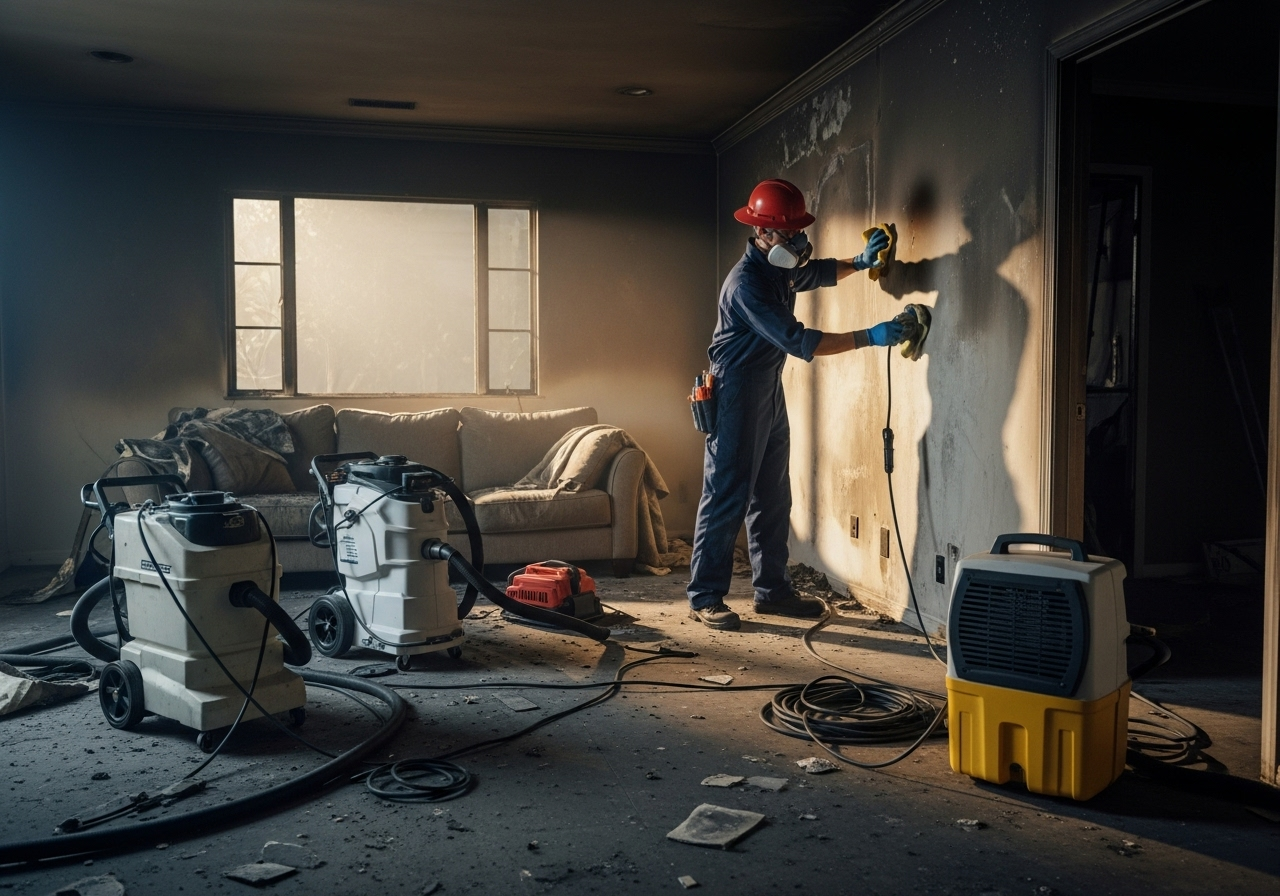
Step 4: Soot and Smoke Removal
This is one of the most delicate and technical parts of the restoration process. Soot particles are tiny, acidic, and capable of embedding deep into materials. If handled incorrectly, they can smear, spread, or become permanently absorbed into surfaces.
Professionals use specialized methods to remove soot safely, such as:
- HEPA vacuuming
- Dry and wet soot sponging
- Chemical cleaning agents
- HVAC duct decontamination
During this stage, many homeowners begin to feel hopeful again because visible progress becomes apparent. Rooms gradually lose the smoky discoloration, and surfaces start to look clean and livable once more.
Step 5: Odor Neutralization and Air Purification
Fire odors have a way of clinging to every corner of the home. They penetrate fabrics, insulation, flooring, and even structural materials. Simply masking the smell does nothing—true odor removal requires breaking down the odor molecules at the source.
Restoration teams use advanced deodorization techniques such as:
- Thermal fogging
- Hydroxyl generator treatment
- Ozone remediation
- Deep cleaning of air ducts
This phase brings tremendous emotional relief. When the smoke smell finally lifts, homeowners feel the first true sense of normalcy returning. The home begins to feel like a safe, breathable space again.
Step 6: Cleaning and Restoring Salvageable Belongings
Once the structure of the home is stabilized and deep cleaning begins, one of the most meaningful phases for homeowners is the restoration of personal belongings. These items hold memories, histories, and emotional weight—far beyond their monetary value. In the aftermath of a fire, many belongings appear lost at first glance: clothing stained with soot, furniture covered in residue, cherished keepsakes damaged by smoke or water. But with specialized cleaning methods and advanced deodorization techniques, many of these items can be restored to their pre-loss condition.
Professionals use tools such as ultrasonic cleaners for delicate items, ozone chambers to neutralize odors, and gentle detail cleaning for sentimental objects. This stage often becomes a turning point for families because it reminds them that not everything has been lost. Some of the most cherished items can still be saved and returned to their rightful place in the home.
A Technician's Anecdote: A Moment I'll Never Forget
"I've been doing fire damage restoration for years, but there's one day I'll never forget. We were working on a home in Reseda where a stove fire had spread smoke through every room. The homeowners were devastated. They'd already convinced themselves that most of their personal belongings—especially anything sentimental—were gone.
As I was sorting through the damaged items, I found a small wooden jewelry box tucked away on a shelf. It was covered in soot, and the lining was badly stained. I didn't know its story, but something about it felt important. Instead of sending it to disposal, I decided to take extra time with it.
I carefully cleaned the exterior, treated the fabric inside, and ran it through multiple deodorization cycles. It took hours longer than the average item, but I felt it was worth it.
The next day, I handed the restored box back to the homeowner. She froze—then started crying. It had belonged to her grandmother, and she believed it was ruined forever. Seeing her reaction reminded me why we do this work. It's not about the objects—it's about giving people back pieces of their life when they feel like everything has been taken from them."
This human connection is at the heart of true fire damage restoration. It's not just technical labor—it's emotional restoration as well.
Step 7: Reconstruction and Structural Repairs
Once debris is cleared, soot is removed, and the home is fully dried, the rebuilding phase begins. This is when the house starts to look alive again. Depending on the extent of the fire, reconstruction may involve partial rebuilding or full structural restoration. Walls may need replacing, ceilings might require new insulation, flooring might be rebuilt, and appliances or cabinetry may be reinstalled.
This stage is transformative. It shifts the focus from loss to renewal. Homeowners often feel renewed optimism when they see walls being repaired, fresh paint covering previously damaged areas, and rooms starting to resemble their former selves. With companies like Yostin Water Damage & Restoration Inc, the reconstruction phase comes with transparency, quality craftsmanship, and a steady, reassuring presence.
Factors That Influence the Restoration Timeline
Understanding the timeline helps homeowners stay grounded during an emotional recovery period. Several factors shape how long the process takes:
Extent of Physical Damage
A small kitchen fire may require weeks of restoration, while a whole-home blaze may take months. The more structural components damaged by flames or heat, the longer reconstruction will take.
Soot Type and Smoke Behavior
Different fires produce different kinds of soot. Protein fires, for example, leave behind an invisible yet pervasive residue that requires detailed cleaning. Plastics and synthetic materials create acidic soot that must be addressed quickly.
Water and Fire Suppression Damage
If large amounts of water were used to extinguish the fire, drying alone can add several days or weeks to the process.
Home Layout and Material Types
Older homes in Reseda, homes with multi-level layouts, or those featuring custom finishes require tailored restoration approaches.
Insurance Processing and Approvals
Insurance timing can influence when certain phases can begin. Clear documentation from professionals like Yostin Water Damage & Restoration Inc helps streamline this step.
The more homeowners understand these factors, the more confident and patient they feel throughout the restoration journey.
Step 8: Final Inspection and Walkthrough
When the last repairs are complete and the home has been fully restored, a final inspection ensures all work meets safety standards, building codes, and quality expectations. During this walkthrough, homeowners get to ask questions, inspect repairs, and verify that odors, soot, and water-related issues have been fully resolved.
This is one of the most emotional points of the process. Standing in a fully restored home—one that felt lost only weeks earlier—brings an immense sense of relief and gratitude. It marks the transition from recovery to renewed stability.
The Emotional Journey of Returning Home
Recovering from a fire is not only a physical process but an emotional one. Homeowners often move through stages: initial shock, uncertainty, grief for what was lost, and finally hope and relief as restoration progresses. The moment they step back into a clean, rebuilt, and safe home becomes a powerful symbol of resilience.
The smell of clean air, the sight of freshly restored walls, the feeling of stable flooring beneath their feet—these small details carry deep emotional weight. Many homeowners say the restored home feels even more meaningful because it represents overcoming something difficult together as a family.
Why Choosing the Right Restoration Team Matters
Fire damage is complex, requiring not just technical skill but compassion, patience, and respect for what homeowners are going through. A trusted company like Yostin Water Damage & Restoration Inc offers more than restoration—they offer emotional steadiness during a chaotic time. Their experience in Reseda's unique housing styles, climate patterns, and safety concerns ensures that every stage is handled with confidence and clarity.
With the right team, restoration becomes not just a repair project, but a guided path back to comfort, security, and peace of mind.
A Clear Path Forward After the Fire
Fire damage can change a home in seconds, but with a structured restoration plan, compassionate professionals, and a clear timeline, recovery becomes possible—and even empowering. Every step, from the first emergency response to the final walkthrough, rebuilds not only the property but the homeowner's sense of stability.
With expert help from Yostin Water Damage & Restoration Inc, families in Reseda can move through the process with confidence, clarity, and a strong sense of support. Your home can be rebuilt. Your comfort can return. And after the smoke settles, a new chapter begins—one marked by renewal, resilience, and peace.